
Infrared (IR) seekers play a crucial role in modern defense systems, enabling precise target tracking and engagement even in challenging environments. However, one of the persistent challenges in IR sensing is maintaining a high signal-to-noise ratio (SNR), which directly impacts detection accuracy and reliability. Recent advances in artificial intelligence (AI) have introduced powerful methods to enhance SNR, allowing IR seekers to distinguish targets from background clutter and countermeasures more effectively than ever before.
This article explores how AI improves signal-to-noise ratio in infrared seekers, examining the underlying challenges, the latest AI-driven techniques, and the practical benefits for defense applications. For those interested in related innovations, our guide on how ai identifies vulnerable points in incoming missiles provides further insight into AI’s expanding role in missile defense.
The Challenge of Noise in Infrared Sensing
Infrared seekers detect heat signatures from targets, such as aircraft or missiles, by capturing IR radiation. However, these signals are often weak and can be easily masked by background noise. Sources of noise include environmental factors (like clouds, terrain, and weather), sensor limitations, electronic interference, and deliberate countermeasures such as flares or jamming devices.
Traditional signal processing techniques, while effective to a degree, often struggle to keep up with increasingly sophisticated threats and complex operational environments. As a result, defense engineers have turned to artificial intelligence to push the boundaries of what’s possible in IR sensing.
How AI Enhances Signal-to-Noise Ratio in Infrared Seekers
AI-driven algorithms are transforming the way IR seekers process and interpret data. By leveraging machine learning and deep learning, these systems can learn to recognize patterns, filter out irrelevant information, and adapt to new types of noise or deception tactics. Here are some of the main ways in which AI improves signal-to-noise ratio in infrared seekers:
- Adaptive Filtering: AI models can dynamically adjust filtering parameters based on real-time environmental conditions, outperforming static filters and reducing false alarms.
- Pattern Recognition: Deep neural networks excel at distinguishing genuine target signatures from background clutter, even when the differences are subtle or masked by noise.
- Anomaly Detection: Machine learning algorithms can flag unusual patterns that may indicate the presence of a target or an attempt to deceive the seeker, such as the deployment of decoy flares.
- Sensor Fusion: AI can combine data from multiple sensors (e.g., IR, radar, visible light) to improve overall detection confidence and suppress noise from any single source.

Key AI Techniques for Reducing Noise
Several specific AI techniques have proven highly effective in boosting SNR for IR seekers:
Deep Learning-Based Denoising
Convolutional neural networks (CNNs) are particularly adept at image denoising. By training on large datasets of IR imagery, these networks learn to reconstruct clean target signatures while suppressing noise. This approach is especially valuable in low-contrast or high-clutter environments where traditional filters fail.
Real-Time Data Processing
Modern AI algorithms can process IR data in real time, enabling seekers to adapt instantly to changing conditions. This rapid response is critical in fast-moving scenarios, such as missile engagements, where milliseconds matter. For more on the operational impact of AI, see our article on the impact of ai on real-time situational awareness for commanders.
Transfer Learning and Continuous Adaptation
AI models can be updated with new data, allowing them to learn from emerging threats and adapt to novel noise sources. Transfer learning enables the reuse of knowledge gained from one scenario to improve performance in another, making AI-powered IR seekers more resilient and future-proof.
Operational Benefits of Enhanced SNR
Improving SNR in IR seekers yields several tangible benefits for defense operations:
- Greater Detection Range: Enhanced SNR allows seekers to detect targets at longer distances, providing more reaction time and improving engagement success rates.
- Reduced False Alarms: By filtering out noise more effectively, AI-driven seekers minimize the risk of false positives, which can lead to wasted resources or missed threats.
- Improved Target Discrimination: AI helps distinguish between genuine threats and decoys, such as flares or chaff, increasing the likelihood of successful interception.
- Robustness in Adverse Conditions: Whether facing poor weather, heavy clutter, or electronic countermeasures, AI-enhanced seekers maintain performance where traditional systems might fail.
Case Studies and Real-World Applications
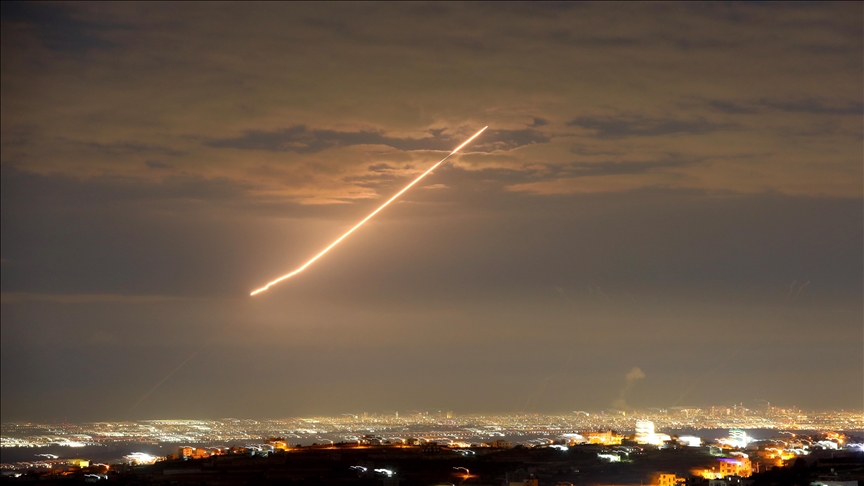
Defense organizations around the world are rapidly adopting AI-enhanced IR seekers. For example, recent missile defense systems have demonstrated improved resilience against advanced countermeasures by integrating deep learning-based signal processing. These systems can adapt to new threat profiles, learn from operational data, and continuously refine their detection algorithms.
For a deeper dive into how AI is transforming sensor technology, the article Sensing the Invisible: AI in Modern Sensing Systems provides a comprehensive overview of the latest research and practical deployments.
Integration with Broader Defense Systems
The benefits of AI-driven SNR enhancement extend beyond individual seekers. When integrated into larger defense networks, these technologies contribute to improved situational awareness, faster decision-making, and more effective countermeasure deployment. For instance, AI models can help optimize the use of decoy flares, as discussed in our analysis of how ai optimizes the deployment of decoy flares, ensuring that resources are used efficiently and threats are neutralized promptly.
Furthermore, the ability to identify the type of fuel used in a missile launch, as explored in how ai identifies the type of fuel used in a missile launch, can provide valuable context for interpreting IR signatures and further refining SNR improvements.
Future Directions for AI in IR Sensing
As AI research continues to advance, new techniques are emerging that promise even greater gains in SNR for IR seekers. These include:
- Generative AI Models: Capable of simulating realistic IR signatures and noise patterns, these models can be used to train and test seekers in virtual environments before deployment.
- Edge AI Processing: Deploying AI algorithms directly on seeker hardware reduces latency and enables real-time adaptation without reliance on external data links.
- Collaborative Learning: Sharing data and insights across platforms allows for rapid updates and collective improvement in detection capabilities throughout a defense network.
As these innovations mature, the gap between signal and noise will continue to narrow, making IR seekers more reliable and versatile in the face of evolving threats.
FAQ: AI and Signal-to-Noise Ratio in Infrared Seekers
What is signal-to-noise ratio, and why is it important for IR seekers?
Signal-to-noise ratio (SNR) measures the strength of a target’s signal relative to background noise. In IR seekers, a high SNR means the system can more easily detect and track targets, even in cluttered or deceptive environments. Low SNR can result in missed detections or false alarms, reducing the effectiveness of the seeker.
How does artificial intelligence specifically help reduce noise in IR sensing?
AI uses advanced algorithms to identify patterns, filter out irrelevant data, and adapt to new types of noise or countermeasures. Techniques like deep learning-based denoising, adaptive filtering, and sensor fusion enable AI-powered IR seekers to distinguish genuine targets from background clutter more effectively than traditional methods.
Are there any limitations or challenges to using AI for SNR improvement?
While AI offers significant advantages, it also requires large, high-quality datasets for training and can be computationally intensive. Ensuring real-time performance and robustness against adversarial tactics are ongoing challenges. However, continued research and advances in hardware are helping to address these issues.
Conclusion
The integration of artificial intelligence into IR seeker technology marks a major step forward in overcoming the persistent challenge of noise in infrared sensing. By leveraging adaptive algorithms, deep learning, and real-time data processing, AI is enabling defense systems to achieve higher SNR, greater detection accuracy, and improved resilience against evolving threats. As AI capabilities continue to evolve, the future of IR seekers looks increasingly robust and adaptable, strengthening the foundation of modern defense operations.