

The rapid advancement of artificial intelligence has transformed the way defense analysts and engineers approach missile launch detection and analysis. One of the most technically challenging aspects is determining the type of fuel used in a missile launch based on remote sensing data. This capability is crucial for intelligence gathering, non-proliferation monitoring, and understanding the technological capabilities of different missile systems. In this article, we explore how modern AI systems process sensor data, imagery, and environmental cues to distinguish between solid, liquid, and hybrid propellants during missile launches.
For those interested in the broader application of AI in missile detection, you may find the insights in how ai identifies missile launch signatures from space particularly relevant.
Understanding Missile Propellants and Their Signatures
Before delving into how AI identifies the type of fuel used in a missile launch, it’s important to understand the basic categories of missile propellants. The most common types are:
- Solid propellants: These are pre-mixed chemical compounds that ignite to produce thrust. They are known for their simplicity, rapid launch readiness, and distinctive exhaust plumes.
- Liquid propellants: These involve separate fuel and oxidizer tanks, mixed during launch. They offer controllable thrust and longer burn times, but require complex handling and fueling procedures.
- Hybrid propellants: These use a combination of solid and liquid components, aiming to balance the advantages of both types.
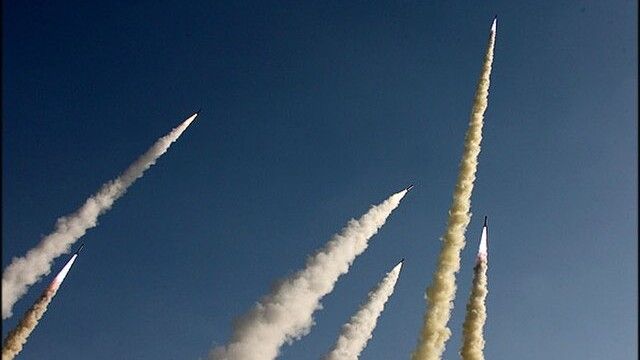
Each propellant type leaves unique signatures in terms of exhaust color, temperature, chemical byproducts, and launch acoustics. Traditionally, experts relied on visual analysis and spectroscopy, but the sheer volume and complexity of modern launch data demand automated, intelligent solutions.

Key Data Sources for AI-Based Fuel Identification
AI systems tasked with determining missile fuel types rely on a variety of sensor inputs. The most significant sources include:
- Optical and infrared imagery: High-speed cameras and satellite sensors capture the launch event, providing data on exhaust plume shape, color, and thermal characteristics.
- Spectroscopic analysis: Sensors break down the light emitted from the plume into its component wavelengths, revealing the chemical composition of the exhaust.
- Acoustic sensors: Microphones and infrasound detectors record the sound profile of the launch, which varies depending on combustion type and fuel characteristics.
- Radar and telemetry: These systems track the missile’s acceleration and trajectory, which can indirectly suggest the propulsion method.
By fusing these diverse data streams, AI models can build a comprehensive picture of the launch event. For a deeper dive into how multiple sensors are combined, see this overview of sensor fusion in aerospace applications.
Machine Learning Techniques for Fuel Type Classification
The core of AI-driven fuel identification lies in advanced machine learning algorithms. These systems are trained on vast datasets of known missile launches, each labeled with the correct fuel type. Some of the most effective approaches include:
- Convolutional Neural Networks (CNNs): Used for analyzing imagery, CNNs can detect subtle differences in plume shape, color gradients, and thermal signatures that correlate with specific propellants.
- Spectral pattern recognition: AI models trained on spectroscopic data can identify the unique emission lines of chemicals like aluminum oxide (from solid fuels) or nitrogen tetroxide (from certain liquid fuels).
- Audio classification models: By analyzing the frequency and amplitude of launch sounds, AI can distinguish between the sharp crack of solid fuel ignition and the sustained roar of liquid engines.
- Sensor fusion networks: These models combine inputs from multiple sources, improving accuracy by correlating visual, spectral, and acoustic cues.
Training these models requires not only large datasets but also careful validation to avoid false positives—especially important in high-stakes defense scenarios.
Real-World Applications and Challenges
The ability to automatically determine the fuel type used in missile launches has significant implications for global security. Intelligence agencies can rapidly assess the technological maturity of adversaries, monitor compliance with treaties, and respond to emerging threats. However, several challenges remain:
- Data quality and availability: Cloud cover, sensor limitations, and countermeasures (like launch concealment) can degrade the data available to AI systems.
- Generalization: AI models must be robust enough to handle new missile designs and unknown fuel formulations.
- Adversarial tactics: Some actors may attempt to spoof or mask their launch signatures, requiring AI to adapt and learn from evolving threats.
Despite these hurdles, ongoing research and collaboration between defense agencies and the private sector are steadily improving the reliability of AI-based fuel identification.
How AI’s Fuel Analysis Integrates with Broader Missile Detection Systems
Determining the propellant type in missile launches using AI is just one part of a much larger ecosystem. These systems often work in tandem with other AI-driven technologies for launch detection, trajectory prediction, and post-event analysis. For example, understanding how AI handles environmental factors is crucial, as discussed in how ai handles atmospheric interference in tracking.
By integrating fuel identification with real-time tracking and damage assessment, defense networks can form a more complete operational picture. This holistic approach enhances early warning capabilities and supports more effective decision-making during critical events.
Future Trends in AI-Based Missile Fuel Detection
As AI models continue to evolve, several trends are shaping the future of missile fuel identification:
- Improved sensor technology: Next-generation satellites and ground-based sensors will provide higher-resolution data, enabling even more precise analysis.
- Real-time processing: Advances in edge computing and cloud infrastructure will allow AI systems to deliver near-instantaneous assessments of missile launches.
- Collaborative intelligence: International partnerships and data sharing will help build larger, more diverse training datasets, improving model robustness.
- Integration with other AI domains: Fuel identification will increasingly be linked with AI-driven threat assessment, countermeasure deployment, and strategic planning.
These developments promise to make AI-based analysis an indispensable tool for defense and intelligence communities worldwide.
FAQ
What are the main differences between solid and liquid missile fuels?
Solid fuels are pre-mixed and stored within the missile, offering rapid launch capability and simpler logistics. Liquid fuels require separate storage of fuel and oxidizer, which are combined during launch, allowing for more controllable thrust but with added complexity and preparation time. Each type produces distinct exhaust and acoustic signatures that AI can analyze.
How accurate are AI systems at identifying missile fuel types?
The accuracy of AI-based identification depends on the quality of sensor data and the robustness of the machine learning models. With high-quality imagery, spectroscopic data, and comprehensive training, AI can achieve high reliability, often surpassing manual analysis. However, accuracy can be affected by environmental conditions and attempts to mask launch signatures.
Can AI distinguish between hybrid and conventional propellants?
Yes, advanced AI models trained on diverse datasets can often differentiate between hybrid, solid, and liquid fuels. This is achieved by analyzing subtle variations in exhaust composition, plume behavior, and launch acoustics. Ongoing research continues to improve the precision of these distinctions.
How does sensor fusion enhance AI’s ability to identify missile fuels?
Sensor fusion combines data from multiple sources—such as optical, infrared, acoustic, and radar sensors—allowing AI to cross-validate findings and reduce the risk of false positives. This multi-modal approach increases the accuracy and reliability of fuel identification, especially in complex or obscured launch scenarios.
Where can I learn more about AI in missile detection and tracking?
For a comprehensive overview of related technologies, refer to the guide to AI-driven space-based missile warning and explore further resources on AI-assisted post-launch analysis and real-time defense communications.