
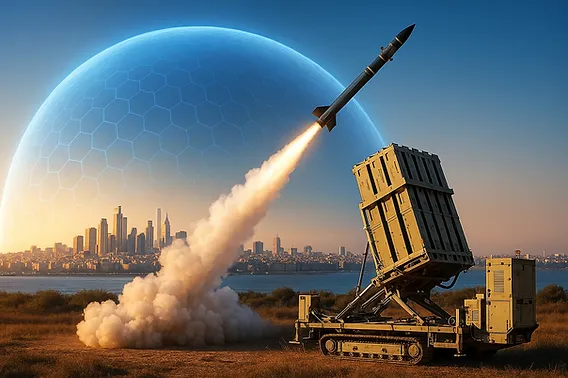
The rapid evolution of artificial intelligence has brought about significant changes in how modern defense and security operations are managed. Among the most transformative advancements is the emergence of agentic AI—AI systems capable of autonomous decision-making and adaptive action. When integrated into command and control (C2) environments, these intelligent agents offer a range of advantages that can enhance operational efficiency, responsiveness, and resilience.
As military and security challenges become increasingly complex, the need for faster, more reliable, and adaptive decision-making tools is greater than ever. Agentic AI is uniquely positioned to address these demands by providing systems that can not only process vast streams of data but also act on them with minimal human intervention. This article explores the key benefits of agentic AI for command and control environments, highlighting how these technologies are reshaping the future of defense operations.
For readers interested in related advancements, the article on how ai manages saturation attacks and swarms provides further insight into AI’s growing role in modern defense strategies.
Understanding Agentic AI in Modern C2 Systems
At its core, agentic AI refers to artificial intelligence systems that can operate independently, set goals, and adapt their actions based on changing circumstances. Unlike traditional rule-based automation, agentic AI leverages advanced learning algorithms, real-time data analysis, and flexible decision frameworks. This enables these systems to respond to unforeseen situations, learn from experience, and coordinate complex operations across multiple domains.
In the context of command and control, agentic AI agents can monitor sensor feeds, assess threats, allocate resources, and even initiate countermeasures—all while maintaining a continuous feedback loop with human operators. This partnership between human and machine intelligence is critical for managing the scale and speed of today’s operational environments.
Key Advantages of Agentic AI for Command and Control
The integration of agentic AI into C2 frameworks brings several notable benefits. Below, we explore the most impactful ways these intelligent systems are transforming defense and security operations.
1. Enhanced Decision-Making Speed and Accuracy
One of the most significant benefits of agentic AI for command and control is its ability to process and analyze massive amounts of data in real time. In high-stakes environments, where every second counts, agentic AI can sift through sensor inputs, intelligence reports, and situational updates far faster than human teams. This rapid analysis leads to more timely and accurate decisions, reducing the risk of information overload and human error.
For example, in air defense scenarios, agentic AI can autonomously detect, track, and prioritize incoming threats, recommending or executing optimal response strategies within milliseconds. This capability is especially valuable when dealing with saturation attacks or complex drone swarms, where manual intervention would be too slow.
2. Improved Adaptability and Resilience
Traditional C2 systems often struggle to adapt to rapidly changing operational conditions. Agentic AI, however, is designed to learn from new data and adjust its behavior accordingly. This adaptability allows C2 networks to remain effective even as adversaries change tactics or new threats emerge.
By continuously monitoring the environment and its own performance, agentic AI can identify system vulnerabilities, reroute resources, and propose alternative courses of action. This resilience is crucial for maintaining operational continuity in contested or degraded environments.
3. Optimized Resource Allocation and Coordination
Another core advantage is the ability of agentic AI to optimize the allocation of assets and personnel. By evaluating mission objectives, threat levels, and resource availability, these systems can dynamically assign tasks and coordinate actions across multiple units or domains.
This level of coordination is particularly important in joint or coalition operations, where seamless communication and synchronized action are essential. Agentic AI can bridge gaps between disparate systems, ensuring that all elements of the force are working toward shared objectives.
Agentic AI and Sensor Fusion in C2 Operations
Effective command and control relies on the integration of data from a wide range of sensors and platforms. Agentic AI excels at sensor fusion and data integration, combining information from radar, satellite, communications, and other sources to provide a unified operational picture.
By leveraging advanced algorithms, agentic AI can filter out noise, resolve conflicting data, and highlight critical events. This comprehensive situational awareness enables commanders to make better-informed decisions and anticipate adversary actions.

For a deeper dive into the technical aspects of sensor fusion in defense, see the overview on what is ai-driven sensor fusion for air defense.
Human-Machine Teaming and Ethical Considerations
While agentic AI brings many operational benefits, it is essential to maintain a balance between autonomy and human oversight. Human-machine teaming ensures that critical decisions remain under human control, with AI providing recommendations, analysis, and support.
Ethical considerations, such as transparency, accountability, and the potential for unintended consequences, must be addressed as these systems become more prevalent. Clear protocols and robust testing are necessary to ensure that agentic AI operates within established legal and ethical frameworks.
Challenges and Future Outlook
Despite its promise, the adoption of agentic AI in C2 systems is not without challenges. Issues such as interoperability with legacy systems, cybersecurity risks, and the need for continuous training and validation must be managed carefully.
However, ongoing research and development are rapidly addressing these barriers. As agentic AI matures, its role in command and control will likely expand, offering even greater levels of automation, adaptability, and mission effectiveness.
FAQ
What distinguishes agentic AI from traditional automation in C2 systems?
Agentic AI differs from conventional automation by possessing the ability to independently set goals, adapt to changing conditions, and learn from experience. While traditional systems follow predefined rules, agentic AI can make context-aware decisions and adjust its actions in real time.
How does agentic AI improve threat detection and response?
By processing large volumes of sensor and intelligence data rapidly, agentic AI can identify emerging threats more quickly and accurately than human operators alone. It can also recommend or execute response actions, significantly reducing the time between detection and intervention.
Are there risks associated with deploying agentic AI in defense operations?
Yes, there are risks such as potential cybersecurity vulnerabilities, challenges with interoperability, and ethical concerns regarding autonomy. Ensuring robust oversight, regular validation, and adherence to ethical standards is essential for safe and effective deployment.