
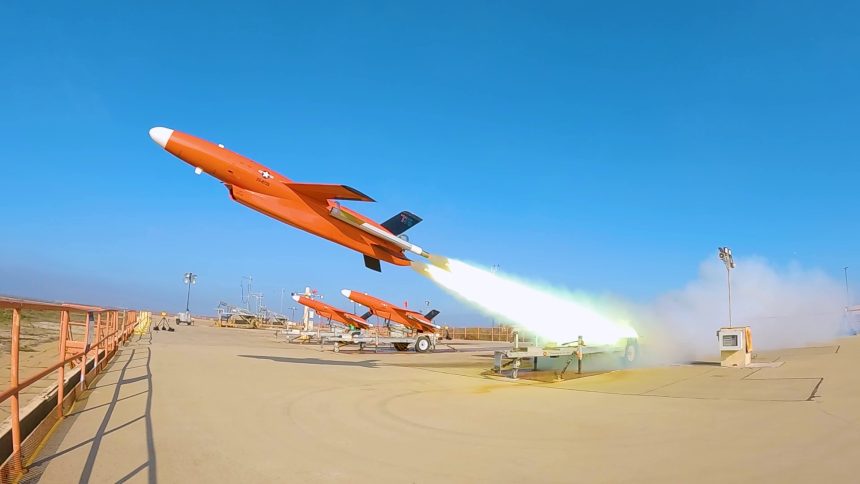
Modern defense systems face a growing challenge: adversaries are deploying increasingly sophisticated decoys and countermeasures to confuse detection and targeting technologies. How AI handles decoys and countermeasures is a critical topic for military strategists, technologists, and policy makers. Artificial intelligence is transforming the way defense platforms distinguish between genuine threats and deceptive tactics, offering new levels of speed, accuracy, and adaptability.
This article explores the technical foundations, operational strategies, and real-world applications of AI in detecting and neutralizing decoys and countermeasures. We’ll examine the algorithms, data sources, and decision-making processes that enable AI to outmaneuver adversarial deception, as well as the ongoing challenges and future directions for this fast-evolving field.
For a deeper look at how machine learning pinpoints weaknesses in missile threats, see our guide on how ai identifies vulnerable points in incoming missiles.
Understanding Decoys and Countermeasures in Modern Warfare
Decoys and countermeasures are designed to mislead, distract, or overwhelm defense systems. These can include radar-reflective balloons, chaff, flares, electronic jamming, and even sophisticated drones that mimic the signatures of real threats. The goal is to force defense systems to waste resources or make incorrect targeting decisions.
Traditional detection methods, often rule-based or reliant on human operators, struggle to keep pace with the sheer volume and complexity of modern countermeasures. This is where AI-powered systems step in, leveraging advanced data analysis and pattern recognition to separate genuine threats from fakes.

Core Techniques: How AI Handles Decoys and Countermeasures
AI approaches the problem of decoys and countermeasures using a combination of machine learning, sensor fusion, and real-time data processing. Here are some of the primary techniques:
- Sensor Fusion: AI systems combine data from multiple sources—radar, infrared, optical, acoustic, and electronic intelligence—to build a comprehensive picture. By correlating information across modalities, AI can spot inconsistencies that betray a decoy.
- Pattern Recognition: Machine learning models are trained on vast datasets of both real threats and known decoys. These models learn to identify subtle differences in movement, signature, or behavior that are difficult for humans or simple algorithms to spot.
- Anomaly Detection: AI excels at flagging outliers—objects or signals that don’t fit expected patterns. This is especially useful when adversaries introduce new types of countermeasures.
- Adaptive Learning: As adversaries evolve their tactics, AI systems can update their models in near real-time, ensuring that detection capabilities remain effective against emerging threats.
Real-World Applications of AI in Counter-Deception
AI’s ability to distinguish between real and fake threats is already being put to use in several domains:
- Missile Defense: AI-driven targeting systems are now a core component of advanced missile defense platforms. They help identify which incoming objects are genuine warheads and which are decoys, enabling more efficient use of interceptors.
- Electronic Warfare: In the electromagnetic spectrum, AI algorithms help filter out jamming signals and identify authentic communications or radar returns.
- Airborne Threat Detection: AI assists in distinguishing between manned aircraft, drones, and decoy targets, improving the accuracy of air defense systems.
For further insights into the operational benefits of AI in large-scale defense scenarios, explore the benefits of ai for theater-level missile defense.

Challenges in AI-Based Decoy and Countermeasure Detection
Despite its promise, AI faces several hurdles in this domain:
- Data Quality and Quantity: Training effective models requires large, diverse datasets of both real threats and decoys. Gathering and labeling this data can be time-consuming and resource-intensive.
- Adversarial Adaptation: Opponents are constantly developing new types of decoys and countermeasures, sometimes specifically designed to fool AI systems. This creates a continuous cycle of adaptation.
- False Positives and Negatives: Even advanced AI can occasionally misclassify objects, leading to wasted resources or missed threats. Balancing sensitivity and specificity is a persistent challenge.
- Ethical and Operational Oversight: Automated decision-making in high-stakes environments requires robust oversight to prevent unintended consequences.
AI’s Role in Future Countermeasure Environments
The future of defense will see even more complex and dynamic countermeasure environments. AI will need to become more autonomous, resilient, and explainable. Some anticipated developments include:
- Collaborative AI Agents: Multiple AI systems working together, sharing data and insights in real time, to improve overall detection and response.
- Explainable AI: As AI decisions become more critical, there is a growing demand for systems that can explain their reasoning to human operators, building trust and accountability.
- Integration with Human Decision-Makers: AI will increasingly serve as an advisor, providing recommendations and highlighting uncertainties, while leaving final decisions to experienced personnel.
To see how AI enhances situational awareness for leaders in complex environments, review our article on the impact of ai on real-time situational awareness for commanders.
How AI-Driven Targeting Systems Enhance Multi-Domain Operations
Modern military operations span land, air, sea, space, and cyberspace. AI-driven targeting systems are uniquely positioned to operate across these domains, integrating data and responses at unprecedented speed. According to a detailed analysis of AI-driven targeting in multi-domain operations, these systems can rapidly re-prioritize threats, allocate resources, and adapt to new forms of deception as they emerge.
This multi-domain capability is vital as adversaries increasingly employ hybrid tactics, blending physical and digital countermeasures. AI’s ability to synthesize information and respond in real time is a decisive advantage.
Optimizing Decoy Deployment with Machine Learning
AI is not only used to detect and defeat decoys but also to deploy them more effectively. By analyzing adversary sensor patterns and response behaviors, machine learning models can recommend optimal timing, placement, and types of decoys to maximize their effectiveness. For an in-depth look at this application, see our resource on how ai optimizes the deployment of decoy flares.
This dual use of AI—both for countering and employing deception—illustrates the technology’s central role in the evolving landscape of modern defense.
FAQ: AI and Countermeasures in Defense
What types of data do AI systems use to identify decoys?
AI systems rely on a wide range of data sources, including radar signatures, infrared imagery, acoustic signals, electronic emissions, and even behavioral patterns. By fusing these diverse inputs, AI can detect inconsistencies that may indicate a decoy or countermeasure.
How does AI adapt to new or unknown countermeasures?
Machine learning models can be updated with new data as adversaries introduce novel decoys or tactics. Some systems use online learning or reinforcement learning to adapt in real time, ensuring that detection algorithms remain effective even as threats evolve.
Can AI completely replace human operators in countermeasure detection?
While AI greatly enhances speed and accuracy, human oversight remains essential—especially in high-stakes scenarios. AI is most effective when used as a decision-support tool, providing recommendations and highlighting uncertainties for human operators to consider.
Conclusion
As adversaries continue to innovate with increasingly sophisticated decoys and countermeasures, AI stands at the forefront of defense innovation. By leveraging advanced data analysis, adaptive learning, and multi-domain integration, AI systems are reshaping the way militaries identify and neutralize deceptive threats. Ongoing research and development will further enhance these capabilities, ensuring that defense systems remain one step ahead in the ever-evolving contest of detection and deception.