
As artificial intelligence continues to transform industries ranging from defense to healthcare, the demand for robust, reliable, and adaptable AI models has never been higher. One of the most effective ways to accelerate and improve the learning process for these systems is through the use of high-fidelity simulations. These advanced digital environments offer a safe, scalable, and highly realistic platform for training algorithms, enabling developers to expose AI to a wide array of scenarios that would be costly, dangerous, or impossible to replicate in the real world.
This article explores the benefits of high-fidelity simulations for AI training, highlighting how these tools enhance learning, improve safety, and drive innovation. For those interested in the intersection of AI and defense technology, you may also want to read about how AI identifies the type of fuel used in a missile launch, which demonstrates practical applications of advanced AI models trained in simulated environments.
Understanding High-Fidelity Simulations in AI Development
At their core, high-fidelity simulations are digital replicas of real-world systems, environments, or processes. They are designed to mimic the complexities, nuances, and unpredictability of actual conditions with a high degree of accuracy. In the context of AI training, these simulations allow algorithms to interact with virtual worlds that closely resemble the operational settings they will eventually face.
Unlike basic or low-fidelity simulations, which may only capture broad strokes or simplified models, high-fidelity versions account for intricate details such as physics, sensor noise, environmental variability, and even human behavior. This level of detail is crucial for training AI systems that must operate reliably in dynamic or safety-critical domains, such as autonomous vehicles, military defense, or medical robotics.
Accelerating Learning and Improving Model Robustness
One of the primary advantages of high-fidelity simulations for AI training is the ability to accelerate the learning process. By exposing AI models to thousands or even millions of diverse scenarios in a controlled, repeatable environment, developers can quickly identify weaknesses, optimize performance, and ensure that algorithms generalize well to new situations.
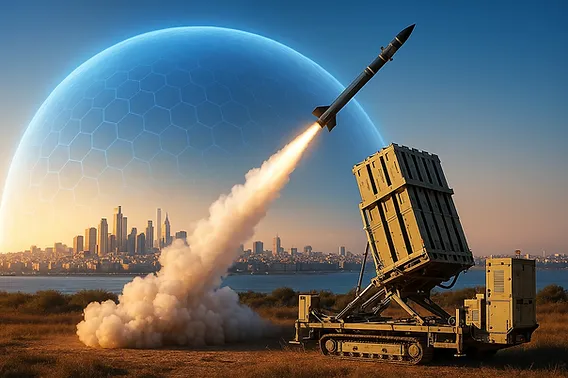
For example, in missile defense applications, simulated environments can present AI systems with a range of threat profiles, weather conditions, and sensor anomalies. This approach is not only faster than real-world testing, but it also allows for the safe exploration of rare or hazardous events. The result is a more robust and adaptable AI, capable of handling edge cases and unexpected challenges.
Enhancing Safety and Reducing Real-World Risks
Training AI in the real world can be risky, especially in sectors like aerospace, defense, or autonomous transportation. High-fidelity simulations provide a risk-free environment where AI models can be tested against dangerous or unpredictable scenarios without endangering people, equipment, or the environment.
For instance, when developing AI for missile interception or autonomous navigation, it is impractical and unsafe to conduct live-fire tests for every possible scenario. Simulated environments allow for comprehensive testing and validation, ensuring that AI systems are well-prepared before deployment. This approach not only saves time and resources but also significantly reduces the likelihood of costly or catastrophic failures.
Supporting Sensor Fusion and Data Integration
Modern AI systems often rely on data from multiple sources, such as radar, infrared, and visual sensors. High-fidelity simulations can accurately model the behavior and limitations of these sensors, enabling AI to learn how to integrate and interpret complex data streams. This process, known as sensor fusion, is essential for applications where situational awareness and rapid decision-making are critical.
By training in simulated environments that replicate real-world sensor characteristics, AI models can develop the ability to filter out noise, detect subtle anomalies, and make informed decisions even in challenging conditions. This capability is particularly valuable in defense and aerospace, where sensor reliability and data accuracy are paramount.
Enabling Scalable and Cost-Effective AI Training
Another significant benefit of high-fidelity simulations for AI training is scalability. Real-world data collection and testing can be expensive, time-consuming, and logistically complex. Simulated environments, on the other hand, can be scaled up or down as needed, allowing for rapid iteration and experimentation.
Developers can run thousands of parallel simulations, explore a wide range of variables, and gather massive amounts of training data in a fraction of the time and cost required for physical testing. This scalability is crucial for developing AI systems that must operate in diverse or rapidly changing environments.
Driving Innovation in AI-Enabled Defense Systems
The use of advanced simulations is not limited to training; it also plays a vital role in research and development. By providing a flexible platform for prototyping and testing new algorithms, high-fidelity environments foster innovation and accelerate the deployment of next-generation AI solutions.
For example, the development of AI for missile defense, anomaly detection, and autonomous targeting can all benefit from simulated testing. Those interested in related advancements may find value in learning about the impact of AI on interceptor hit-to-kill probability and how AI detects subtle anomalies in sensor telemetry, both of which rely on robust training and validation in simulated environments.
Challenges and Considerations in Simulation-Based AI Training
While the advantages of high-fidelity simulations for AI training are clear, there are also challenges to consider. Creating and maintaining realistic digital environments requires significant expertise and computational resources. Simulations must be continuously updated to reflect new threats, technologies, and operational realities.
Additionally, there is always a risk of the “simulation gap”—the difference between simulated and real-world conditions. To mitigate this, developers must validate AI models with real-world data and ensure that simulations are as accurate and comprehensive as possible.
FAQ: High-Fidelity Simulations and AI Training
What makes a simulation “high-fidelity” for AI training?
A high-fidelity simulation closely replicates the physical, environmental, and operational characteristics of the real world. This includes accurate modeling of physics, sensor behaviors, environmental variability, and even human interactions. Such detail enables AI systems to learn and adapt in ways that are directly transferable to real-world scenarios.
How do high-fidelity simulations improve AI safety?
By allowing AI models to be tested in a risk-free digital environment, these simulations enable developers to expose algorithms to rare, dangerous, or unpredictable scenarios without real-world consequences. This process helps identify potential failures and optimize safety before deployment.
Are there limitations to using simulations for AI development?
Yes, while simulations offer many advantages, they can never perfectly replicate every aspect of reality. The “simulation gap” can lead to discrepancies between simulated and real-world performance. Regular validation with real data and continuous updates to the simulation environment are necessary to minimize these limitations.
Conclusion
The benefits of high-fidelity simulations for ai training are far-reaching, impacting everything from the speed and safety of AI development to the reliability and adaptability of deployed systems. As AI continues to play a critical role in defense, aerospace, and other high-stakes industries, the importance of realistic, scalable, and robust training environments will only grow. By leveraging advanced simulations, organizations can accelerate innovation, reduce risks, and ensure that their AI solutions are ready to meet the challenges of the real world.