
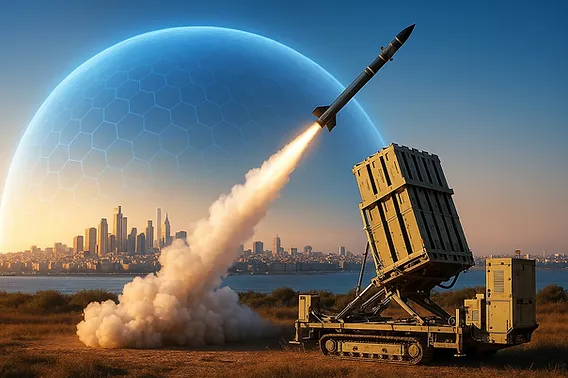
The increasing complexity of modern warfare has led to the development of advanced missile defense systems capable of countering large-scale, coordinated attacks. One of the most significant challenges is distinguishing and prioritizing the most critical threats within a swarm of incoming missiles. Artificial intelligence (AI) has become a key enabler in this domain, providing the speed and analytical power needed to make split-second decisions. Understanding how AI identifies high-value targets in a missile swarm is essential for defense professionals, technologists, and anyone interested in the future of military technology.
AI-driven systems analyze vast streams of sensor data, assess threat levels, and recommend or execute defensive actions in real time. These capabilities not only improve the efficiency of missile defense but also reduce the risk of human error in high-pressure scenarios. This article explores the core technologies, methodologies, and challenges involved in leveraging AI to pinpoint and prioritize the most dangerous threats within a missile barrage.
For those interested in related advancements, you may also want to explore impact of ai on interceptor hit-to-kill probability, which examines how AI optimizes missile interception success rates.
AI’s Role in Missile Swarm Threat Assessment
Modern missile swarms are designed to overwhelm traditional defense systems by launching multiple projectiles simultaneously, often with varying speeds, trajectories, and payloads. The ability to rapidly assess which missiles pose the greatest danger—such as those targeting critical infrastructure or carrying advanced warheads—is vital for effective defense.
AI excels at processing and interpreting the enormous volume of data generated by radar, infrared, and other sensors. By integrating information from multiple sources, AI systems can construct a comprehensive picture of the threat environment. This process, known as sensor fusion, enables the system to distinguish between decoys, less threatening projectiles, and those that represent high-value targets.
A deeper dive into how sensor fusion works in defense applications reveals the importance of combining diverse data streams for accurate target identification.
Key Technologies Used to Identify Critical Threats
Several core technologies underpin the process of AI-driven high-value target identification in missile defense:
- Machine Learning Algorithms: These models are trained on historical and simulated data to recognize patterns associated with different types of missiles and attack profiles. They can quickly classify incoming objects, estimate their likely targets, and assess their threat levels.
- Real-Time Data Processing: AI systems must analyze sensor inputs and make decisions in milliseconds. High-performance computing hardware and optimized software architectures ensure that threat prioritization keeps pace with rapidly evolving attack scenarios.
- Predictive Analytics: By modeling the likely trajectories and behaviors of incoming missiles, AI can forecast which projectiles are most likely to reach sensitive targets or evade interception attempts.
- Automated Decision Support: AI can recommend or autonomously initiate defensive actions, such as allocating interceptors or activating countermeasures, based on its assessment of the threat landscape.
These technologies work together to ensure that defense resources are focused on the most dangerous threats, maximizing the chances of successful interception and minimizing collateral damage.
How AI Prioritizes Targets in Complex Swarm Attacks
The process of how ai identifies high-value targets in a missile swarm involves several sequential steps:
- Detection and Tracking: Sensors detect incoming objects and track their trajectories. AI algorithms filter out noise and false positives, ensuring only genuine threats are considered.
- Classification: Each object is analyzed to determine its type, payload, and likely intent. Machine learning models compare sensor data against known missile signatures and behaviors.
- Threat Evaluation: The system assesses the potential impact of each missile, considering factors such as target location, payload type, and likelihood of successful interception.
- Prioritization: High-value targets—such as those aimed at command centers, population centers, or critical infrastructure—are flagged for immediate action. Decoys or less dangerous projectiles are deprioritized.
- Resource Allocation: Defensive assets are assigned to intercept or neutralize the most significant threats first, optimizing the use of limited resources.
This systematic approach allows AI-driven defense systems to respond effectively even when faced with overwhelming numbers of incoming missiles.
Challenges and Limitations in AI-Based Target Identification
While AI offers significant advantages, several challenges remain in reliably identifying and prioritizing critical threats within missile swarms:
- Sensor Limitations: Adverse weather, electronic countermeasures, and sensor malfunctions can degrade data quality, making accurate classification more difficult.
- Adversarial Tactics: Attackers may deploy decoys, stealth technology, or unpredictable flight paths to confuse AI systems and draw defensive resources away from genuine threats.
- Data Overload: Swarm attacks can generate overwhelming amounts of data, challenging even the most advanced AI systems to maintain real-time performance.
- Ethical and Legal Considerations: The use of AI in autonomous decision-making raises important questions about accountability and compliance with international law.
Continuous improvement of algorithms, sensor technologies, and data integration methods is necessary to address these challenges and ensure reliable performance in real-world scenarios.
Integrating AI with Broader Defense Systems
AI-driven target identification does not operate in isolation. It is part of a larger ecosystem that includes human operators, command and control networks, and other automated systems. Effective integration ensures that AI recommendations are validated and acted upon appropriately, balancing speed with oversight.
For example, AI can provide real-time alerts and suggested actions to human commanders, who retain ultimate authority over engagement decisions. This collaborative approach leverages the strengths of both human judgment and machine precision.
Those interested in how AI supports other aspects of missile defense may find how ai identifies the type of fuel used in a missile launch and what is the role of ai in preventing accidental launches to be valuable resources.
Future Directions in AI-Driven Missile Defense
As both offensive and defensive technologies evolve, the role of AI in missile swarm defense will continue to expand. Future advancements may include:
- Improved Machine Learning Models: Ongoing research is focused on developing algorithms that can adapt to new attack strategies and learn from limited data.
- Enhanced Sensor Networks: Deploying more sophisticated and resilient sensors will improve data quality and system robustness.
- Greater Autonomy: As trust in AI systems grows, there may be increased reliance on automated decision-making for time-critical engagements.
- Integration with Directed Energy Weapons: AI can help coordinate the use of emerging technologies such as lasers and electromagnetic systems for rapid, precise threat neutralization. For more on this, see role of ai in directing directed energy weapons.
These trends point toward a future where AI is indispensable for defending against increasingly sophisticated and numerous missile threats.
FAQ: AI and High-Value Target Identification in Missile Swarms
How does AI differentiate between decoys and genuine threats in a missile swarm?
AI systems use sensor fusion and machine learning to analyze flight patterns, radar signatures, and other data points. By comparing this information to known profiles, AI can often distinguish decoys from real missiles, prioritizing those that pose the greatest risk.
What types of data do AI systems use to assess missile threats?
AI-driven defense platforms rely on data from radar, infrared, optical sensors, and telemetry. This multi-source approach enables more accurate identification and tracking of incoming objects, even in complex or cluttered environments.
Can AI operate autonomously in missile defense scenarios?
While AI can make rapid assessments and recommend actions, most current systems include human oversight for final engagement decisions. However, as technology advances, there is a trend toward greater autonomy, especially in situations where response time is critical.