
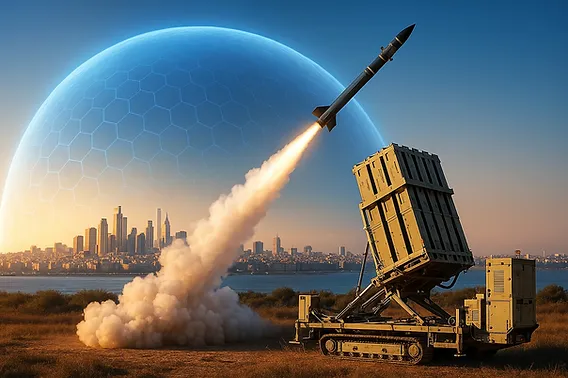
The rapid advancement of artificial intelligence is transforming how defense analysts interpret and respond to missile threats. By leveraging sophisticated algorithms, military and intelligence agencies can process vast amounts of missile test data in real time, extracting actionable insights that were previously out of reach. Understanding how AI analyzes adversary missile test data is crucial for staying ahead in modern defense strategy, as these systems can detect subtle patterns, predict future capabilities, and help inform critical decisions.
This article explores the core techniques, data sources, and practical challenges involved in using AI for missile test analysis. We’ll also look at how these approaches connect with related innovations, such as how AI detects stealth missile signatures and the integration of sensor fusion for comprehensive threat assessment.
Core Data Sources for AI-Driven Missile Test Analysis
The foundation of any AI-based assessment lies in the quality and diversity of the data collected. When monitoring missile tests conducted by potential adversaries, analysts rely on multiple streams of information, including:
- Satellite imagery—High-resolution photos and infrared scans capture launch sites, missile trajectories, and impact zones.
- Radar and telemetry—Ground-based and airborne sensors track flight paths, speed, and altitude in real time.
- Electronic intelligence (ELINT)—Intercepted signals reveal communication patterns and system activations during tests.
- Open-source intelligence (OSINT)—Publicly available news, social media, and government reports can provide context and corroborate technical findings.
AI algorithms excel at fusing these diverse data streams, enabling a more complete and nuanced understanding of missile capabilities and test objectives. For a deeper dive into how different sensor types are integrated, see this resource on sensor fusion in defense applications.
Machine Learning Techniques for Pattern Recognition
At the heart of AI-powered missile test analysis are machine learning models trained to recognize patterns and anomalies. These models can be supervised, unsupervised, or a hybrid, depending on the availability of labeled data and the complexity of the problem.
Supervised Learning for Classification
When historical data is available, supervised learning algorithms can be trained to classify missile types, launch platforms, and test outcomes. For example, convolutional neural networks (CNNs) are often used to analyze satellite images, identifying launch vehicles or distinguishing between missile variants based on shape and size.
Unsupervised Learning for Anomaly Detection
In many cases, adversary missile programs are shrouded in secrecy, making labeled data scarce. Here, unsupervised learning methods such as clustering and autoencoders help detect unusual activity—like unexpected launch patterns or new test locations—by comparing current observations to established baselines.
Time-Series Analysis and Predictive Modeling
Missile test data is inherently temporal. Recurrent neural networks (RNNs) and long short-term memory (LSTM) models can analyze sequences of events, helping predict future tests or estimate the development timeline of new missile systems. These predictive insights are invaluable for strategic planning and resource allocation.
How AI Interprets Telemetry and Flight Data
A critical aspect of how AI analyzes adversary missile test data involves processing telemetry streams and flight profiles. AI systems ingest raw sensor data—such as velocity, altitude, and acceleration—and transform it into structured information that can be compared across tests.
- Trajectory reconstruction—AI algorithms reconstruct three-dimensional flight paths, highlighting deviations from expected behavior that may indicate new guidance systems or evasive maneuvers.
- Performance benchmarking—By aggregating results from multiple tests, AI can benchmark missile performance, revealing incremental improvements or technological leaps.
- Failure analysis—When a test fails, machine learning models can sift through telemetry to pinpoint the likely cause, such as engine malfunction or guidance errors.
These insights are often combined with other AI-driven approaches, such as neural network-based flight path prediction, to provide a comprehensive assessment of missile capabilities.
Challenges and Limitations in Automated Missile Test Assessment
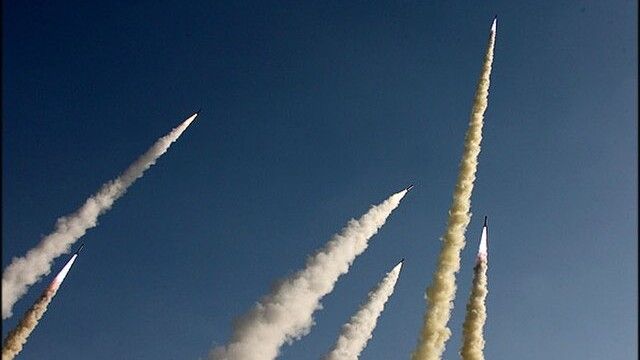
While the benefits of AI-driven analysis are clear, several challenges remain. Data quality and availability can vary widely, especially when adversaries employ countermeasures such as camouflage, decoys, or electronic jamming. Additionally, the “black box” nature of some machine learning models can make it difficult for analysts to interpret results and justify conclusions.
To address these issues, defense organizations are investing in explainable AI (XAI) techniques and cross-validating AI outputs with human expertise. This hybrid approach ensures that automated assessments remain reliable and actionable, even in the face of evolving threats.
Integrating AI Insights into Broader Defense Strategies
The real value of AI in missile test data analysis emerges when insights are integrated into larger defense and intelligence workflows. Automated alerts can trigger rapid responses, while long-term trend analysis informs procurement and research priorities. AI-driven findings also support the development of countermeasures, such as improved interception systems or electronic warfare tactics.
For example, combining missile test analysis with AI-managed energy resources in laser defense systems can optimize the deployment of advanced interceptors, ensuring readiness against emerging threats.
Frequently Asked Questions
What types of AI algorithms are most effective for missile test data analysis?
The most effective approaches typically include convolutional neural networks for image analysis, recurrent neural networks for time-series prediction, and clustering algorithms for anomaly detection. The choice depends on the data type and specific analysis goals.
How does AI handle incomplete or noisy missile test data?
AI systems are designed to handle imperfect data using techniques like data imputation, denoising autoencoders, and robust statistical models. These methods help extract reliable insights even when some information is missing or corrupted.
Can AI distinguish between real missile tests and decoy operations?
Yes, advanced AI models can identify patterns and inconsistencies that may indicate decoy launches or deceptive tactics. By analyzing multiple data sources and historical trends, these systems improve the accuracy of threat assessments.
How is AI analysis of missile tests evolving?
As machine learning models become more sophisticated and data sources expand, AI is increasingly able to provide real-time, high-confidence assessments. Ongoing research focuses on explainability, integration with other defense systems, and resilience against adversarial countermeasures.
For further reading on related innovations, consider exploring the role of computer vision in missile terminal phase tracking and recursive feedback in combat AI systems.