

Advancements in artificial intelligence have transformed the way complex systems respond to unpredictable environments. In high-stakes scenarios—such as missile defense, emergency response, and autonomous vehicles—machines must process incomplete or ambiguous data and make critical choices in real time. Understanding how AI handles rapid decision making under uncertainty is essential for organizations seeking to leverage this technology for both defense and civilian applications.
AI systems are increasingly tasked with interpreting sensor data, predicting threats, and executing actions with minimal delay. These challenges demand not only powerful algorithms but also robust frameworks for managing uncertainty and risk. This article explores the core strategies, technologies, and real-world examples that illustrate how artificial intelligence enables swift, reliable decisions in the face of the unknown.
For a deeper understanding of related AI applications, see impact of ai on interceptor hit-to-kill probability, which discusses how machine learning models improve the effectiveness of missile interception systems.
Core Principles of AI in Uncertain Environments
At the heart of how AI handles rapid decision making under uncertainty are several foundational principles. These guide the design and deployment of intelligent systems that must act quickly, even when data is noisy or incomplete:
- Probabilistic reasoning: AI leverages probability theory to estimate the likelihood of various outcomes, allowing it to weigh risks and benefits dynamically.
- Sensor fusion: By combining data from multiple sources, AI can reduce ambiguity and improve the reliability of its assessments.
- Real-time processing: Advanced algorithms are optimized for speed, enabling split-second analysis and response.
- Adaptive learning: Machine learning models continuously update their understanding based on new information, improving over time.
These principles are critical in domains where hesitation or error can have significant consequences, such as missile defense or autonomous navigation.
Techniques for Managing Uncertainty in AI Systems
To operate effectively under uncertainty, AI systems employ a range of specialized techniques. Some of the most widely used approaches include:
Bayesian Inference and Probabilistic Models
Bayesian inference allows AI to update its beliefs as new data arrives. By representing knowledge as probability distributions, the system can quantify its confidence in different hypotheses and adjust its decisions accordingly. This is especially valuable when dealing with ambiguous sensor readings or incomplete threat information.
Reinforcement Learning for Fast Adaptation
Reinforcement learning enables AI agents to learn optimal actions through trial and error. In uncertain environments, these agents are rewarded for making choices that lead to successful outcomes, even when the path is not clear. Over time, the system becomes adept at handling novel situations and unexpected changes.
Sensor Fusion and Data Integration
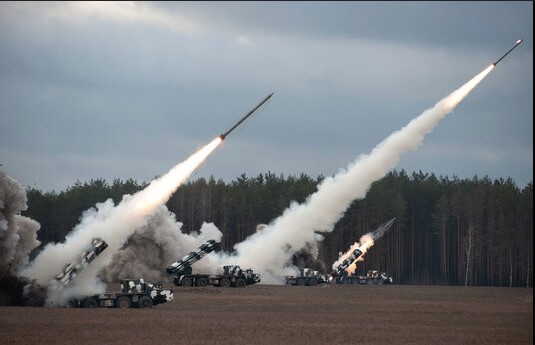
Combining inputs from radar, infrared, satellite, and other sensors allows AI to cross-validate information and reduce the impact of errors or deception. This multi-source approach is crucial in missile detection and tracking, where a single faulty sensor could lead to catastrophic mistakes. For more on this, see how ai detects subtle anomalies in sensor telemetry.
Real-World Applications: Defense and Beyond
Understanding how AI handles rapid decision making under uncertainty is particularly important in defense, where the speed and accuracy of automated responses can determine mission success. Some notable applications include:
- Missile threat assessment: AI systems analyze trajectories, classify objects, and recommend interception strategies within seconds of a launch.
- Autonomous vehicles: Self-driving cars and drones must navigate unpredictable environments, reacting instantly to obstacles or changes in conditions.
- Disaster response: AI-powered robots assist in search and rescue operations, making quick decisions in hazardous, dynamic settings.
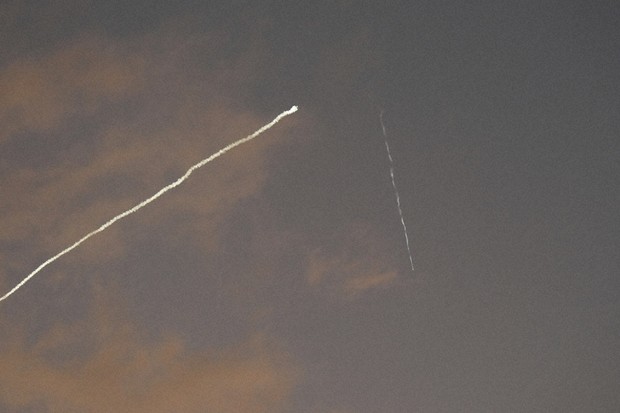
For example, in missile defense, AI-driven platforms integrate radar and satellite data to detect launches, predict impact points, and guide interceptors. These systems must operate with minimal human intervention, as delays can render a response ineffective.
Challenges and Limitations of AI in High-Stakes Decisions
Despite significant progress, several challenges remain in deploying AI for rapid, uncertain decision making:
- Data quality: Poor or misleading data can cause AI systems to make incorrect choices, especially when time is limited.
- Adversarial tactics: In defense, opponents may attempt to deceive or overwhelm AI with false signals or cyberattacks.
- Ethical considerations: Automated decisions in life-or-death scenarios raise questions about accountability and transparency.
- Computational constraints: Real-time processing requires significant computing power, which may not always be available in the field.
Addressing these challenges requires ongoing research, robust testing, and clear operational guidelines. For instance, incorporating redundancy and human oversight can help mitigate the risks associated with fully autonomous systems.
Integrating AI with Human Decision Makers
While AI excels at processing large volumes of data quickly, human judgment remains vital in many situations. The most effective systems combine automated analysis with expert oversight, allowing operators to intervene or override when necessary. This hybrid approach leverages the strengths of both machine speed and human intuition.
For example, in missile defense operations, AI may recommend interception strategies, but final authorization often rests with trained personnel. This ensures both rapid response and accountability.
To learn more about AI’s role in preventing errors, see what is the role of ai in preventing accidental launches, which explores how intelligent systems help avoid unintended actions in complex environments.
Future Directions in AI-Driven Rapid Response
As technology advances, the capabilities of AI in uncertain environments will continue to grow. Emerging trends include:
- Explainable AI: Developing models that can justify their decisions, increasing trust and transparency.
- Distributed intelligence: Networks of AI agents collaborating to share information and coordinate actions in real time.
- Edge computing: Deploying AI algorithms directly on sensors and devices to reduce latency and improve resilience.
- Continuous learning: Systems that adapt to new threats and scenarios without requiring manual updates.
These innovations will further enhance the ability of AI to make fast, reliable choices in unpredictable settings, from defense to disaster management and beyond.
For additional insights into detection technologies, see this overview of ballistic missile detection technologies and defense systems, which covers the latest advancements in threat identification and response.
FAQ: Rapid AI Decision Making in Uncertain Scenarios
How does AI process incomplete or ambiguous data in real time?
AI systems use probabilistic models and sensor fusion to estimate the most likely scenarios, even when some data is missing or unclear. By continuously updating their assessments as new information arrives, these systems can make informed decisions quickly.
What safeguards exist to prevent AI from making critical mistakes under uncertainty?
Redundancy, human oversight, and robust testing are key safeguards. Many systems require human authorization for high-impact actions, and algorithms are designed to flag situations where confidence is low or data is inconsistent.
Can AI adapt to new types of threats or unexpected changes in the environment?
Yes, adaptive learning techniques such as reinforcement learning allow AI to improve its responses over time. These systems can learn from experience, enabling them to handle novel situations and evolving threats more effectively.
For more on related AI capabilities, explore how ai identifies the type of fuel used in a missile launch and role of ai in directing directed energy weapons for further reading on advanced defense applications.