
The ability to accurately follow multiple moving objects in environments filled with noise, distractions, and overlapping signals is a critical challenge in modern defense and surveillance. As threats become faster and more complex, understanding how AI handles multi-target tracking in high-clutter areas is essential for both military and civilian applications. Artificial intelligence is transforming the way systems detect, differentiate, and predict the movement of numerous objects, even when the scene is crowded with irrelevant or confusing data.
This guide explores the core principles, technologies, and real-world applications behind AI-powered tracking in cluttered settings. We’ll also highlight the latest advances, practical challenges, and how these systems are being integrated into broader defense strategies. For those interested in related innovations, you can also learn about how ai identifies the type of fuel used in a missile launch and how these breakthroughs are shaping the future of missile defense.

Understanding the Challenge: Tracking Multiple Objects in Complex Environments
Traditional tracking systems often struggle in environments where many objects move simultaneously and signals overlap. In high-clutter areas—such as urban battlefields, missile defense zones, or crowded airspaces—radar, infrared, and visual sensors can be overwhelmed by noise, false alarms, and ambiguous data. The core challenge is to maintain accurate identification and prediction of each object’s path without confusing targets or losing track.
AI-driven solutions approach this problem by leveraging advanced algorithms that can process vast amounts of sensor data, filter out irrelevant information, and continuously update object trajectories. This capability is especially important for applications like missile defense, where distinguishing between real threats and decoys can be a matter of national security.
Key AI Techniques for Multi-Target Tracking in Cluttered Settings
How AI handles multi-target tracking in high-clutter areas relies on a combination of machine learning, deep learning, and probabilistic modeling. Here are some of the most effective approaches:
- Data Association Algorithms: These methods match sensor detections to specific targets, even when objects cross paths or signals overlap. Techniques like the Joint Probabilistic Data Association Filter (JPDAF) and Multiple Hypothesis Tracking (MHT) are widely used.
- Deep Neural Networks: Convolutional neural networks (CNNs) and recurrent neural networks (RNNs) can learn to recognize and predict object movement patterns, even in visually complex scenes.
- Sensor Fusion: AI combines data from multiple sensor types (radar, infrared, optical) to improve accuracy and reduce the impact of clutter or sensor-specific noise.
- Clutter Rejection: Specialized algorithms filter out irrelevant signals, such as birds, weather phenomena, or debris, allowing the system to focus on genuine targets.
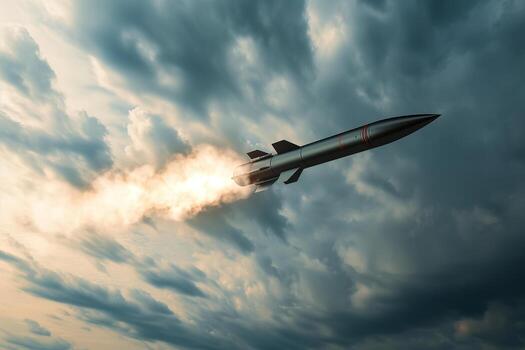
Real-World Applications: Missile Defense and Beyond
The most prominent use case for these AI-powered systems is advanced missile defense. When multiple projectiles, decoys, and debris are present, the system must quickly and reliably distinguish between them to allocate interceptors and resources efficiently. AI’s ability to parse through clutter and maintain accurate tracks is critical for both detection and engagement.
Beyond defense, similar techniques are used in air traffic control, autonomous vehicles, maritime surveillance, and even wildlife monitoring. In each case, the core challenge remains: tracking multiple moving objects in environments filled with distractions and noise.
For a deeper dive into how AI is used to track fast-moving threats in real time, see this detailed explanation of AI tracking for hypersonic missiles.
How AI Handles Multi-Target Tracking in High-Clutter Areas: Step-by-Step Process
To understand the operational flow, let’s break down the typical process used by AI systems for multi-object tracking in cluttered environments:
- Sensor Data Collection: Multiple sensors gather raw data, including radar reflections, infrared signatures, and optical images.
- Preprocessing and Clutter Filtering: AI algorithms filter out obvious noise and irrelevant signals, such as weather or background objects.
- Object Detection: Machine learning models identify potential targets within the cleaned data stream.
- Data Association: The system matches new detections to existing tracks, even when objects are close together or cross paths.
- Trajectory Prediction: Using probabilistic models and neural networks, the AI predicts future positions of each target, accounting for possible maneuvers or evasive actions.
- Continuous Update: As new data arrives, the system updates its tracks and predictions in real time, adapting to changes in the environment or target behavior.

Advantages of AI-Based Multi-Object Tracking
AI brings several key benefits to the challenge of tracking in cluttered environments:
- Improved Accuracy: Machine learning models can distinguish between real targets and false alarms more effectively than rule-based systems.
- Real-Time Adaptation: AI systems can adjust to changing conditions, such as new types of clutter or unexpected target maneuvers.
- Scalability: These solutions can handle dozens or even hundreds of targets simultaneously, making them suitable for large-scale defense or surveillance operations.
- Reduced Operator Workload: By automating the most complex aspects of tracking, AI allows human operators to focus on decision-making rather than data processing.
Challenges and Limitations
While AI has made significant strides, some challenges remain:
- Sensor Limitations: Poor sensor quality or limited coverage can still hinder detection and tracking accuracy.
- Adversarial Tactics: Opponents may use decoys, jamming, or stealth technology to confuse AI systems.
- Computational Demands: Real-time tracking of many objects requires significant processing power and optimized algorithms.
- Data Quality: AI models are only as good as the data they are trained on. Incomplete or biased datasets can lead to errors.
For more on how AI is improving the probability of successful interception in missile defense, see this resource on the impact of ai on interceptor hit-to-kill probability.
Integrating AI Tracking with Broader Defense Systems
Modern defense platforms are increasingly integrating AI-powered tracking with other advanced technologies. For example, AI can work alongside sensor anomaly detection systems to ensure that incoming data is reliable. If you’re interested in how AI detects subtle issues in sensor data, explore this article on how ai detects subtle anomalies in sensor telemetry.
Additionally, AI-driven tracking is often paired with automated decision-making tools that can recommend or execute responses, such as launching interceptors or issuing alerts. This integration is essential for rapid, coordinated defense in high-stakes environments.
Future Directions and Ongoing Research
Research continues to push the boundaries of what AI can achieve in multi-target tracking. Areas of focus include:
- Explainable AI: Developing models that provide clear reasoning for their decisions, increasing trust and transparency.
- Edge Computing: Running AI algorithms directly on sensors or local devices to reduce latency and improve responsiveness.
- Collaborative Systems: Enabling multiple AI agents to share information and coordinate tracking across large areas.
- Robustness to Adversarial Attacks: Making AI systems more resilient to intentional deception and electronic warfare tactics.
FAQ
How does AI distinguish between real targets and clutter in complex environments?
AI uses a combination of machine learning models and probabilistic algorithms to filter out irrelevant signals, such as birds or weather, while focusing on the unique signatures and movement patterns of genuine targets. Sensor fusion and advanced data association techniques help maintain accurate tracks even when objects are close together or signals overlap.
What types of sensors are typically used in AI-powered multi-target tracking?
Common sensors include radar, infrared, optical cameras, and sometimes acoustic or radio-frequency sensors. AI systems often combine data from multiple sources to improve accuracy and reduce the impact of sensor-specific noise or blind spots.
Can AI-based tracking systems adapt to new types of threats or clutter?
Yes, modern AI models can be retrained or updated with new data to recognize emerging threats, decoys, or novel forms of clutter. This adaptability is one of the key advantages of using AI for multi-object tracking in dynamic environments.