
Tracking missiles in real time is a complex challenge, especially when atmospheric conditions disrupt sensor data. How AI handles atmospheric interference in tracking has become a critical question for defense technology. Atmospheric effects—such as clouds, rain, dust, and turbulence—can distort or obscure the signals that radar, infrared, and optical sensors rely on to detect and follow fast-moving threats. Artificial intelligence is now at the forefront of overcoming these obstacles, enabling more accurate and timely responses to missile launches.
In this article, we’ll explore the core challenges posed by the atmosphere, the AI techniques used to address them, and the real-world impact of these innovations. For readers interested in broader defense technology trends, the impact of 5g on real-time ai defense communication is also shaping the future of military operations.
Understanding Atmospheric Interference in Missile Detection
Before diving into artificial intelligence solutions, it’s important to understand why the atmosphere poses such a problem for missile tracking systems. Sensors—whether ground-based, airborne, or satellite—depend on electromagnetic waves to detect and follow objects. However, these waves are easily disrupted by:
- Cloud cover and precipitation, which scatter or absorb radar and infrared signals.
- Dust, smoke, and aerosols that create noise and reduce visibility for optical and infrared sensors.
- Temperature gradients and turbulence, which bend or distort electromagnetic waves, leading to inaccurate readings.
These factors can cause false alarms, missed detections, or tracking errors—potentially allowing a missile to evade defense systems. The need for robust solutions has driven the adoption of AI-powered approaches.
AI-Powered Solutions for Atmospheric Challenges
Modern air defense systems increasingly rely on artificial intelligence to process sensor data and compensate for environmental disruptions. Here’s how advanced algorithms are making a difference:
Sensor Fusion and Data Integration
One of the most effective AI techniques is sensor fusion. By combining data from multiple types of sensors—such as radar, infrared, and optical—AI can cross-reference information and filter out anomalies caused by weather or atmospheric interference. This approach increases the reliability of missile tracking, even when one sensor’s data is compromised.
For example, if a radar signal is weakened by heavy rain, AI can weigh infrared or optical data more heavily in its calculations. This dynamic adjustment is only possible with machine learning models trained on vast datasets of atmospheric conditions and sensor responses.
Noise Reduction and Signal Processing
AI excels at distinguishing between genuine missile signatures and noise generated by the environment. Deep learning models can be trained to recognize the unique patterns of atmospheric interference, allowing them to filter out false positives and improve the accuracy of detections.
These algorithms continuously learn from new data, adapting to evolving weather patterns and sensor technologies. As a result, missile tracking systems become more resilient against unpredictable atmospheric effects.
Predictive Modeling and Real-Time Corrections
Another key application is the use of predictive models to anticipate how the atmosphere will affect sensor readings. AI can simulate the path of electromagnetic waves through current weather conditions, adjusting its tracking algorithms in real time. This proactive approach reduces the risk of losing track of a missile during critical moments.
In addition, AI-driven systems can recommend adjustments to sensor settings—such as frequency or angle—to optimize performance under specific atmospheric scenarios.
Case Studies: AI in Action for Missile Tracking
The integration of artificial intelligence into missile defense is not just theoretical. Several countries and defense organizations have already deployed AI-powered solutions to manage atmospheric interference.
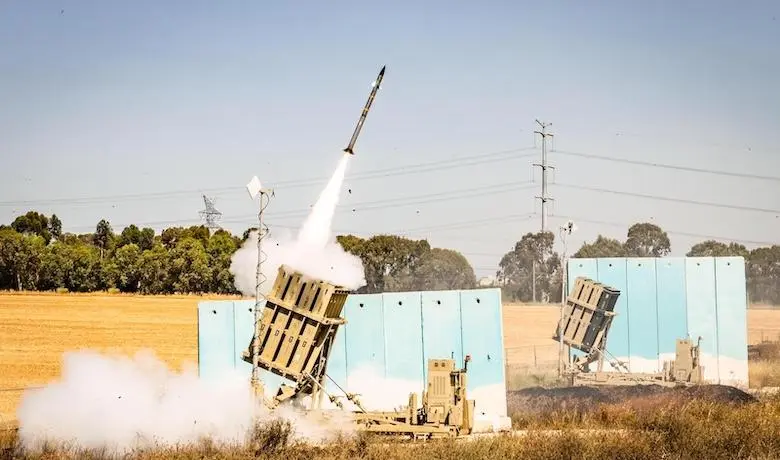
- Israel’s Iron Dome uses advanced algorithms to filter out noise from dust storms and heavy rain, ensuring reliable interception of incoming threats.
- U.S. and NATO missile defense systems leverage AI for sensor fusion, allowing them to track hypersonic and maneuvering targets even in adverse weather.
- India’s missile test monitoring has incorporated AI to improve detection rates during monsoon conditions, where traditional sensors struggle.
These real-world examples demonstrate the value of AI in overcoming environmental obstacles and enhancing the effectiveness of missile defense networks.
Emerging Trends and Future Directions
As threats become more sophisticated, the demand for robust tracking solutions will only increase. The future of AI-driven atmospheric interference mitigation points toward several promising trends:
- Edge computing is enabling faster, on-site AI processing, reducing latency and allowing for real-time corrections even in remote or contested environments.
- Collaborative AI networks are allowing multiple defense assets—such as satellites, drones, and ground stations—to share data and coordinate tracking efforts, further reducing the impact of local atmospheric disruptions.
- Continuous learning ensures that AI models stay up to date with new atmospheric phenomena and sensor technologies, maintaining high levels of accuracy over time.
For more on how artificial intelligence is transforming defense operations, see how how ai coordinates multi-layered defense shields to provide layered protection against evolving threats.
Challenges and Limitations of AI in Missile Tracking
While artificial intelligence offers significant advantages, it is not without its challenges. Some of the ongoing issues include:
- Data quality and availability: AI models require large, high-quality datasets to learn from. Infrequent or poorly labeled atmospheric events can limit performance.
- Adversarial tactics: Opponents may attempt to exploit known weaknesses in sensor networks or AI algorithms by creating artificial interference or decoys.
- Computational demands: Real-time processing of sensor data under challenging conditions requires significant computing power, especially for complex AI models.
Ongoing research and development are focused on addressing these limitations and ensuring that AI remains a reliable tool for defense.
Related Innovations and Resources
The intersection of AI and missile tracking is a rapidly evolving field. For those interested in deeper technical insights, the article on how ai analyzes adversary missile test data provides a look at how algorithms interpret complex sensor outputs. Additionally, new developments in AI tools for air defense against advanced missiles and drone swarms are pushing the boundaries of what’s possible in real-time threat detection.
Frequently Asked Questions
How does AI distinguish between atmospheric interference and real missile threats?
AI systems are trained on large datasets containing both genuine missile signatures and various types of atmospheric noise. By learning the unique patterns associated with each, AI can filter out false positives and focus on true threats, even when weather conditions are challenging.
Can AI compensate for all types of atmospheric interference?
While AI significantly improves the ability to track missiles in difficult conditions, it is not infallible. Extremely severe weather or novel atmospheric phenomena can still pose challenges. However, ongoing training and sensor fusion techniques help mitigate most common issues.
Is AI used only for missile tracking, or does it have other defense applications?
AI is widely used across defense operations, including surveillance, threat assessment, and coordination of multi-layered defense shields. Its ability to process large volumes of data and adapt to changing conditions makes it valuable for a range of military and security tasks.