
As the manufacturing landscape evolves, companies face a pivotal choice between embracing advanced digital technologies or maintaining established production processes. Understanding the difference between smart manufacturing and traditional manufacturing is crucial for organizations aiming to remain competitive, efficient, and responsive to market changes.
This guide explores how digital transformation is reshaping factories, the core distinctions between modern and conventional production, and what these changes mean for businesses of all sizes. We’ll also highlight practical examples, benefits, and challenges, helping you make informed decisions about your own manufacturing strategy.

For those interested in seeing how artificial intelligence is already transforming production, you can review examples of AI in manufacturing to gain further insights into real-world applications.
Core Principles of Conventional Production Approaches
Traditional manufacturing relies on established, often manual or semi-automated processes. These systems typically use fixed machinery, human labor, and standardized workflows. The focus is on mass production, repeatability, and minimizing costs through economies of scale.
- Manual oversight: Operators play a central role in monitoring, adjusting, and maintaining equipment.
- Linear workflows: Processes follow a set sequence, with limited flexibility for customization or rapid change.
- Limited data usage: Information is often collected manually and used primarily for basic reporting or troubleshooting.
- Reactive maintenance: Equipment is serviced after a failure or on a fixed schedule, which can lead to downtime.
- Quality control: Inspections are typically performed at the end of the line, increasing the risk of defects going undetected until late in the process.
What Sets Smart Manufacturing Apart?
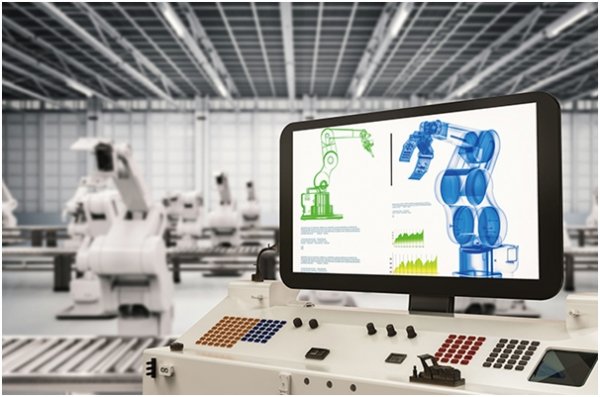
In contrast, smart manufacturing leverages digital technologies such as the Industrial Internet of Things (IIoT), artificial intelligence, machine learning, cloud computing, and advanced robotics. These innovations enable factories to become more connected, adaptive, and data-driven.
- Real-time data collection: Sensors and connected devices monitor every stage of production, providing instant feedback and insights.
- Predictive analytics: AI-powered tools anticipate equipment failures, optimize maintenance schedules, and reduce unplanned downtime.
- Flexible production: Automated systems can quickly switch between product types or adjust parameters to meet changing demand.
- Integrated supply chains: Digital platforms link suppliers, manufacturers, and distributors, improving coordination and responsiveness.
- Continuous improvement: Data-driven decision-making supports ongoing optimization of quality, efficiency, and resource use.
For a deeper dive into how artificial intelligence is shaping the sector, consider reading about the future of AI in manufacturing and the trends driving Industry 4.0.
Key Differences Between Smart Manufacturing and Traditional Manufacturing
To better understand the difference between smart manufacturing and traditional manufacturing, it’s helpful to compare their main characteristics side by side:
| Aspect | Traditional | Smart |
|---|---|---|
| Process Control | Manual or semi-automated | Automated, adaptive, and data-driven |
| Data Utilization | Limited, mostly for reporting | Extensive, real-time analytics and optimization |
| Flexibility | Low, fixed workflows | High, rapid changeovers and customization |
| Maintenance | Reactive or scheduled | Predictive and preventive |
| Quality Control | End-of-line inspection | In-line, continuous monitoring |
| Human Involvement | High, manual intervention | Reduced, focused on oversight and optimization |
Benefits of Embracing Digital Manufacturing Technologies
Organizations that adopt smart manufacturing techniques can realize several significant advantages:
- Increased efficiency: Automation and data-driven decisions streamline operations and reduce waste.
- Improved product quality: Real-time monitoring and analytics catch defects early, ensuring higher consistency.
- Enhanced flexibility: Factories can quickly adapt to new products, market demands, or supply chain disruptions.
- Lower operational costs: Predictive maintenance and optimized resource use minimize downtime and expenses.
- Greater sustainability: Smart systems help track energy use and emissions, supporting environmental goals.
To see how these benefits are achieved in practice, explore resources on how AI improves production efficiency in modern factories.
Challenges and Considerations When Transitioning to Smart Manufacturing
While the advantages are clear, moving from conventional to digital-first production is not without obstacles. Common challenges include:
- Upfront investment: Implementing new technologies requires capital for equipment, software, and training.
- Workforce adaptation: Employees need new skills to manage and interpret digital systems.
- Data security: Increased connectivity can expose operations to cybersecurity risks.
- Integration complexity: Linking legacy equipment with modern platforms can be technically demanding.
- Change management: Shifting company culture and processes takes time and careful planning.
For manufacturers evaluating the shift, it’s important to weigh these factors and develop a clear roadmap for digital transformation. Learning about AI and automation in manufacturing can provide further guidance on streamlining production systems.
Real-World Applications and Industry Examples
Across sectors, companies are already seeing the impact of smart manufacturing. For instance, automotive plants use connected robots and predictive analytics to optimize assembly lines, while electronics manufacturers rely on real-time quality monitoring to reduce defects. Food and beverage producers are leveraging IoT sensors to ensure safety and traceability throughout the supply chain.
For a comprehensive overview of how artificial intelligence is being applied in real factories, this resource on AI in manufacturing offers detailed case studies and practical insights.
FAQ: Understanding the Shift from Traditional to Smart Manufacturing
What is the main distinction between smart and conventional manufacturing?
The primary difference lies in the use of digital technologies. Smart manufacturing integrates real-time data, automation, and advanced analytics to create adaptive, efficient production systems, while traditional methods rely more on manual processes and fixed workflows.
Is it possible to combine both approaches in a single facility?
Yes, many companies adopt a hybrid model, gradually introducing smart technologies alongside existing equipment. This allows for phased upgrades and helps manage costs, training, and integration challenges.
How does digital manufacturing improve product quality?
By continuously monitoring production with sensors and analytics, smart factories can detect and address quality issues in real time, reducing defects and ensuring more consistent output.
What skills are needed for a workforce in a smart factory?
Employees must be comfortable with data analysis, digital tools, and automated systems. Upskilling in areas like robotics, machine learning, and cybersecurity is often necessary to fully leverage new technologies.
Conclusion
The shift from traditional to smart manufacturing represents a fundamental change in how products are made, managed, and delivered. By understanding the essential differences, benefits, and challenges, organizations can better prepare for a future where adaptability, efficiency, and data-driven decision-making are key to success.
For those interested in how machine learning specifically optimizes factory processes, further information is available on how machine learning works in factories.